

From a Different Vintage
on good wine, old cars, and the things we allow to appreciate with time

In 2018, a single bottle of Domaine de la Romanée-Conti from 1945 was sold at Sotheby’s for $558,000. That same bottle broke a world record this year after being sold at Acker La Paulée Auction in Delaware for a whopping $812,500.
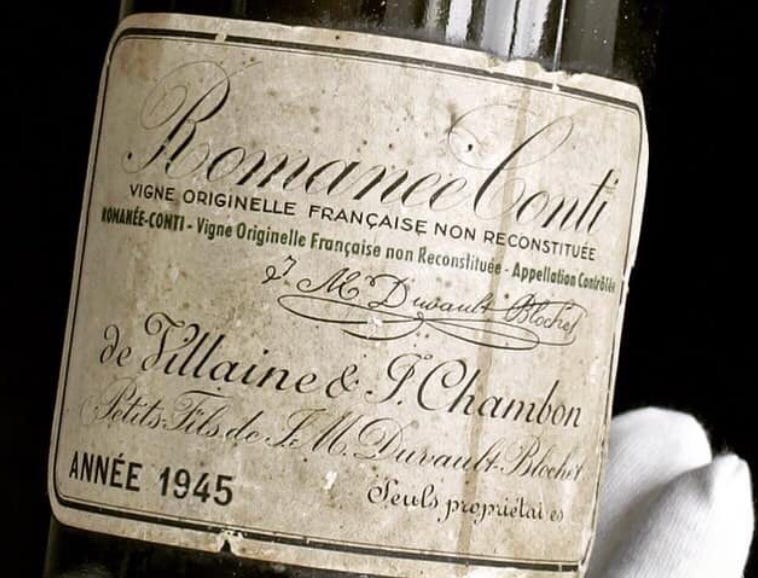
I had three thoughts when I came across this information.
The first being that must be one hell of a bottle of wine, the second being i’m totally in the wrong industry, and the third being how oddly specific that number felt. That extra $500 fascinated me, as there is something so unintentionally comic about a number so astronomical still insisting on precision — as if someone thought $812,000 sounds about right, but let’s not get carried away. Anyway, what do I know.
This discovery got me thinking about the extensive list of things society has decided only gets better and much more valuable with age.
Wine, apparently, is only the beginning.
A 1970’s muscle car that would’ve cost you $4000 off the lot is worth, on average, roughly 65% more today than just five years ago. A roll of 35mm film has seen its wholesale demand jump 127% since 2020, as the return of vintage inspired film photography — with it’s grainy but beautifully unique imperfections — has captured the hearts of young people all over the world.
The Market For Getting Older
The Vintage Car
I fondly remember my first summer out of high school and the thrill I got when my boss lent me a 1976 White Ford Bronco to drive around — a car that had only been purchased because the owner wanted a car older than she was, simply to lessen the blow of turning 40. I also remember an ex-boyfriend dismissing it as “dingy”, unaware that this car was, and I mean this in no genuinely snobby way, probably worth more than his college tuition. It was also then that I realized he and I had no future together.

I can promise almost nobody is taking a look at this car and wishing it were newer. Except maybe my ex-boyfriend.
The car may not have run particularly well, and it certainly could’ve used a clean, but it was what it was because it was no longer 1976. It was old, it was nostalgic, and at least to me, it was pretty perfect.
The most interesting thing about first-generation Broncos is they were never really meant to become luxury objects.
A 1976 Ford Bronco retailed for roughly $5,000 when it was new. Today, depending on condition, that same car can fetch well into six figures. And before you get started on inflation, $5,000 in 1976 holds the same purchasing power as just under $30,000 in 2026, so the value has certainly appreciated greatly, inflation or not.
And Broncos are hardly alone.
The Vintage Watch
There are perhaps few better examples of society’s obsession with aging beautifully than the Rolex Daytona.
When Rolex first introduced the Cosmograph Daytona in 1963, it retailed for a few hundred dollars — expensive, certainly, but not impossible. It was designed for race car drivers, not collectors, and actually originally struggled to sell. Jewelry stores reportedly had trouble moving them at all. Which feels almost impossible to imagine now.
Today, vintage models routinely sell for hundreds of thousands — sometimes millions — of dollars, particularly the famously coveted “Paul Newman” versions. In 2017, Paul Newman’s own Daytona, engraved inside by his wife with the words “drive carefully, me”, sold at auction for a staggering $17.8 million.

The irony of this, of course, is that many of the very details collectors obsess over today were once considered flaws. Slight discoloration of the dial, fading, tiny inconsistencies from age, evidence of use.
Collectors call it patina — a word that somehow transforms wear and tear into luxury. And let me just say — the price of patina is steep.
These watches have become valuable not in spite of the years past, but because of them.
The Handbag That Got Better With Wear
Then there is the Hermés Birkin, which may be one of the most fascinating and iconic examples of society deciding age is chic.
Unlike many luxury purchases today — which lose value the second you walk out of the store — the Birkin market behaves almost irrationally.
If you are lucky enough to be offered one directly from Hermés, the retail price is not actually entirely absurd based on luxury standards, dependent on leather and hardware. Expensive, yes, but not like sell your kidney expensive.
However, the moment someone leaves the Hermés store with a brand new Birkin, the bag becomes significantly more valuable.
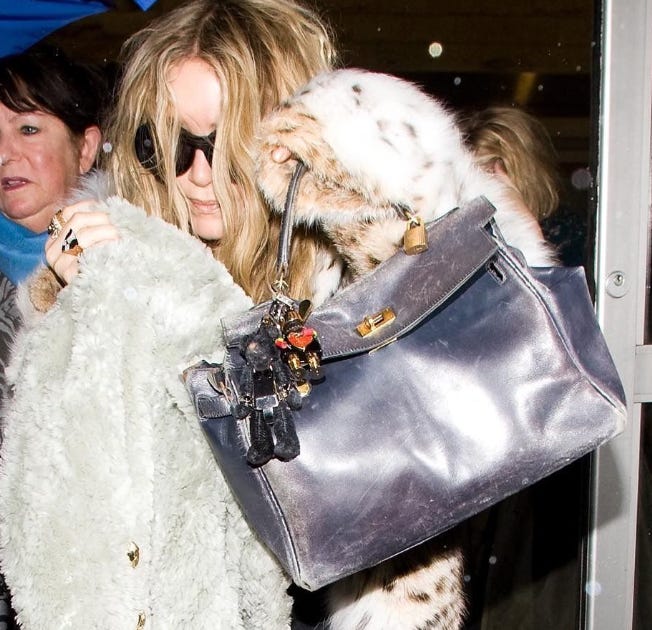
Because Birkins are notoriously difficult to acquire, resale prices often exceed retail almost immediately. Depending on scarcity, color, leather, and demand, a Birkin that cost $14,000 in-store might suddenly command an appraisal of $25,000, $40,000, or significantly more on the secondary market. Which means, oddly enough, that the used bag is often worth more than the brand new one.
In fact, Hermés bags have become so financially reliable that some analysts have claimed they outperform the stock market as investments — a sentence that feels deeply vindicating for women who have long insisted their shopping habits were, in fact, smart financial planning.
Perhaps the girls have been diversifying all along. And of course, nobody understood this better than Jane Birkin herself.

The woman for whom the bag was named famously carried hers into the ground.
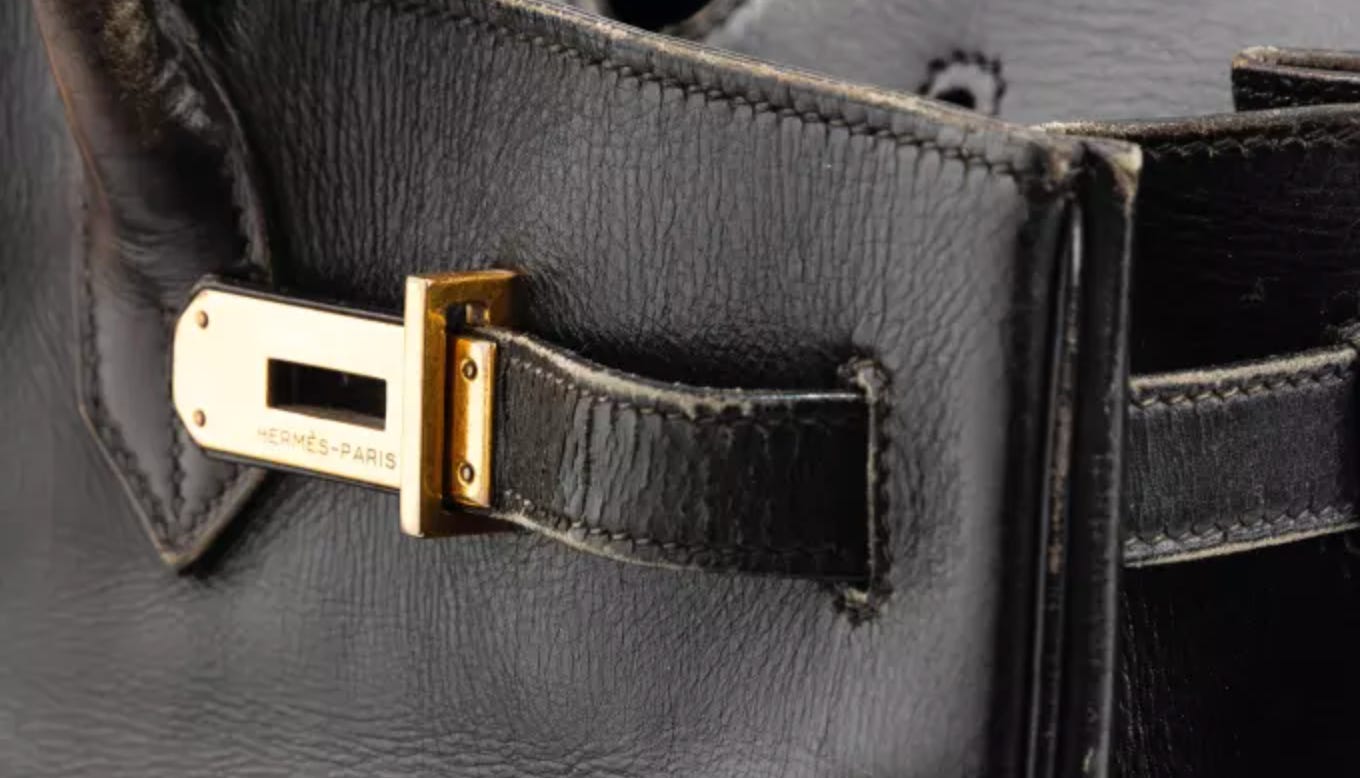
In 2025, Jane Birkin’s original prototype Birkin — the very first one ever made, complete with scuffs, softened leather, stickers, her initials “J.B.” stamped into the flap, and nearly a decade of daily wear — sold at Sotheby’s for over $10 million, becoming the most expensive handbag ever sold at auction. Not despite the wear, but because of it.
The One Exception
The world has decided that there are plenty of things to be revered with every passing year — we just haven’t gotten around to deciding it about ourselves.
Here is what we do when something gets old and we love it: we put it in a vault. We build it a climate-controlled room. We track its provenance and call it rare. We let it appreciate.
Here is what we do when a person gets old: we hand them a brochure. We force them out of their careers. We demand they do everything they can to appear younger. We view them as a burden rather than something that has appreciated in value over time with history, age, and rarity.
Especially women. Which feels strange, doesn’t it? Because we seem perfectly capable of understanding the beauty of age — just selectively.
There is a cruelty in the gap between these things that I keep returning to, especially in a culture that has decided simultaneously that analog film is art, aged whiskey is a sound investment, and a woman over 40 should definitely be doing something about those lines.
Wrinkles in linen are elegant.
Wrinkles in leather? Luxurious.
Wrinkles on a watch face? Patina.
But wrinkles on a person? Unbearable.
I suppose the greatest contradiction here is we seem deeply moved by the evidence that something has lived, right until that evidence appears on ourselves.
The Other Market
The global anti-aging industry crossed $71.7 billion in 2023 and is projected to hit $93.1 billion by 2027. I participate in a fair share of these anti-aging tactics myself, which is why I feel confident in telling you that what we are witnessing isn’t so much a wellness industry than it is one built off of fear. It runs on almost the same instinct as the wine vault and climate controlled garage — except instead of selling preservation, it’s selling reversal.
Women are the primary customers. Approximately 94% of all Botox type treatments in 2023 were performed on women. Over 25 million minimally invasive cosmetic procedures were performed in the United States that year alone. And the cultural pressure is trending younger: between 2019 and 2022, the number of people under 20 receiving neuro-modulator injections 75%. Adults in their 20s: up 71%.
A 2024 survey of over 2,000 women found that 41% say aging negatively affects their mental health, with many citing anxiety and depression. One in six women has experienced ageism at work — a passed-over promotion, a job application that went nowhere. Twenty-five percent report declining social invitations because they worry about being shunned from society. Not because they're ill. Not because they've done anything wrong. Because time has passed, and we have collectively told women that this is a problem to be solved.
Proof of Life
There is another thing I feel is worth noting because I hear of it constantly in my day to day life.
Consider your great-grandmother’s jewelry.
Many people will keep it, pass it down, have it appraised and then stored in felt lined boxes. We know exactly which drawer it lives in and fondly label it a family heirloom. We hopefully know which great-grandmother it belonged to, but the woman herself? Perhaps we have three photographs. And maybe a general sense that she made very good pie.
We have, in other words, carefully curated the artifact and quietly erased the artist. We keep the evidence that she lived, but just not her. Which brings me back to the rarity argument.
We assign enormous value to things that are old and scarce. A bottle of 1945 Romanée-Conti is worth $812,500 largely because there are only so many left in the world, and time has transformed what remains into something unrepeatable. We understand this logic instinctively. Scarcity plus time equals treasure.
So consider: the average American woman lives to approximately 79 years; the average man, roughly 73. By that math, someone who has made it to 80 is, by any reasonable measure, genuinely rare. More rare, probably, than a case of first-growth Bordeaux. There are few bottles of the 1945 Romanée-Conti vintage left in the world. But the number of people alive today who remember 1945 firsthand — who hold eighty years of accumulated context, history, and loss in their living memory — is also shrinking every single day.
And unlike the wine, they cannot be cellared. There will not be another vintage.
A Tale As Old As Time
Cicero understood this, or tried to make others understand it, which is almost the same thing.
In 44 BC — when he was 62 years old, recently widowed of his daughter, politically marginalized, and by most accounts having a genuinely terrible year — Cicero wrote De Senectute, or On Old Age. It is one of the oldest sustained defenses of aging in Western literature, and the fact that someone had to write a formal defense at all tells you everything about how Roman society may have felt on the subject.
He structured it as a dialogue, putting his argument in the mouth of Cato the Elder — a Roman statesman who lived to 85, which was extraordinary for the era and sounds almost fictional given what the Romans were eating and doing. Cato defends old age against its four standard criticisms: that it removes you from active life, weakens the body, strips you of pleasure, and delivers you uncomfortably close to death. His answer to each is essentially: you are measuring this wrong. The pleasures of the mind don’t diminish with age — they deepen. Wisdom and memory are forms of wealth that accumulate rather than depreciate. And as for death — death is not old age’s fault. It comes for everyone. The young man dying in battle and the old woman dying in her bed are equally mortal; she simply survived long enough for us to treat her as a problem.
Cicero lost the argument, culturally speaking. We’re still having it, approximately 2,070 years later, just now with considerably more Botox involved.
The people who have tried to make this case are not in short supply. Simone de Beauvoir wrote The Coming of Age in 1970 — a full cultural autopsy of how Western society discards the elderly — and it was considered almost shocking in its directness.
What I keep returning to, after all of it — the wine, the watches, the bags, the brooches, the philosophy — is that the problem has never been that we don’t understand aging. We so clearly do. We built entire markets around it. We wrote the philosophy. We ran the auctions. We constructed, with tremendous care and enormous amounts of money, a whole civilization of reverence for the old.
We just never included people in the category. Particularly women, who are handed a brochure about collagen loss around the same age a bottle of wine starts becoming genuinely interesting.
The 1945 Romanée-Conti did not ask to be valuable, nor did it did apologize for its age. It did not try to taste like something younger. It simply became what it was by the very patient act of surviving, and someone decided that was worth $812,500.
I sometimes wonder what we might be willing to pay if we learned to see people the same way.
I’ll Leave You With This
A collection of photographs throughout my grandfather’s life. Photos weathered — just like his skin and greyed hair — showing a life fully lived.
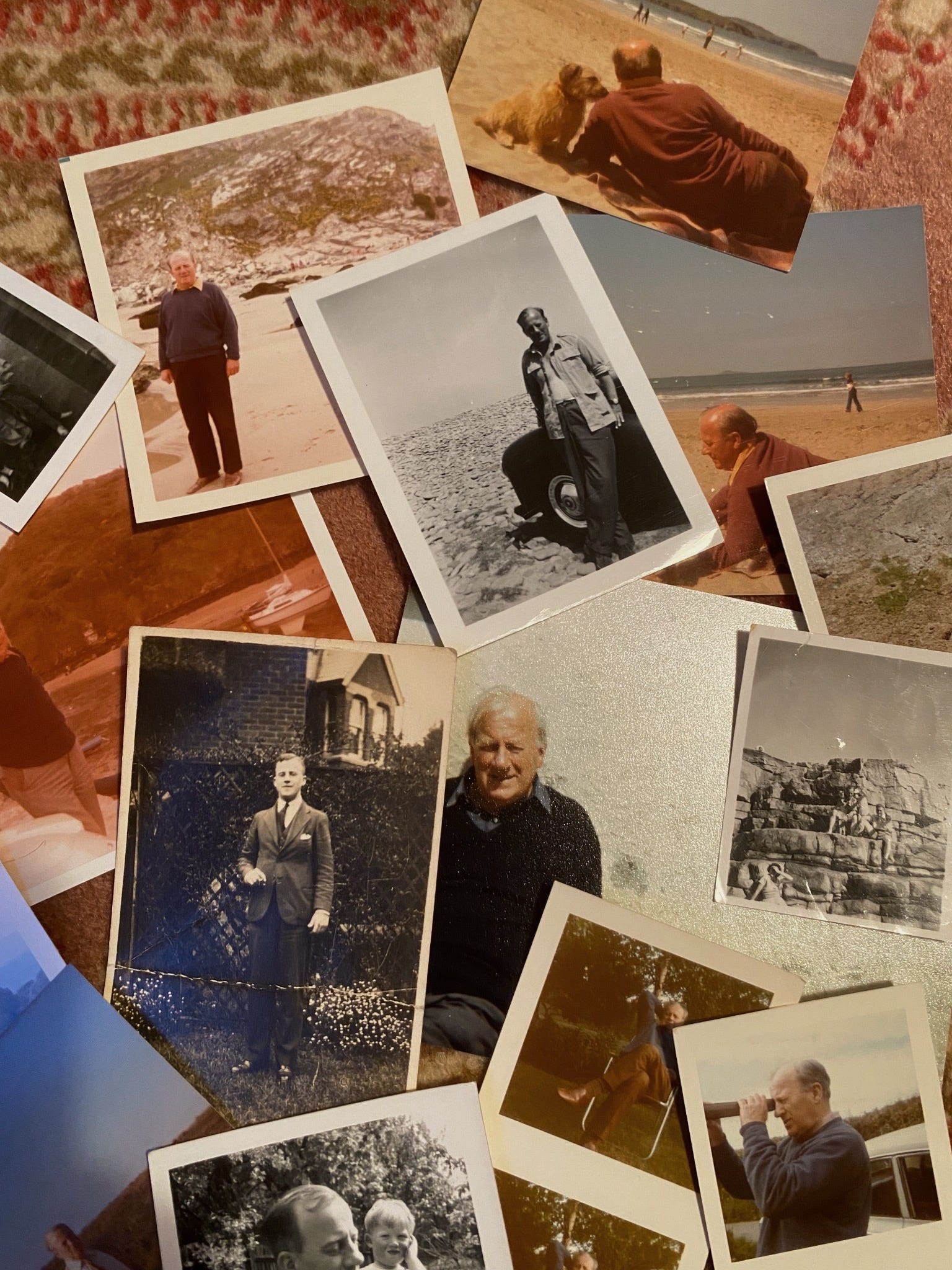
Three generations of Farr’s. One would not be possible without the other. And none of it would be possible without time.

My grandma and grandpa.
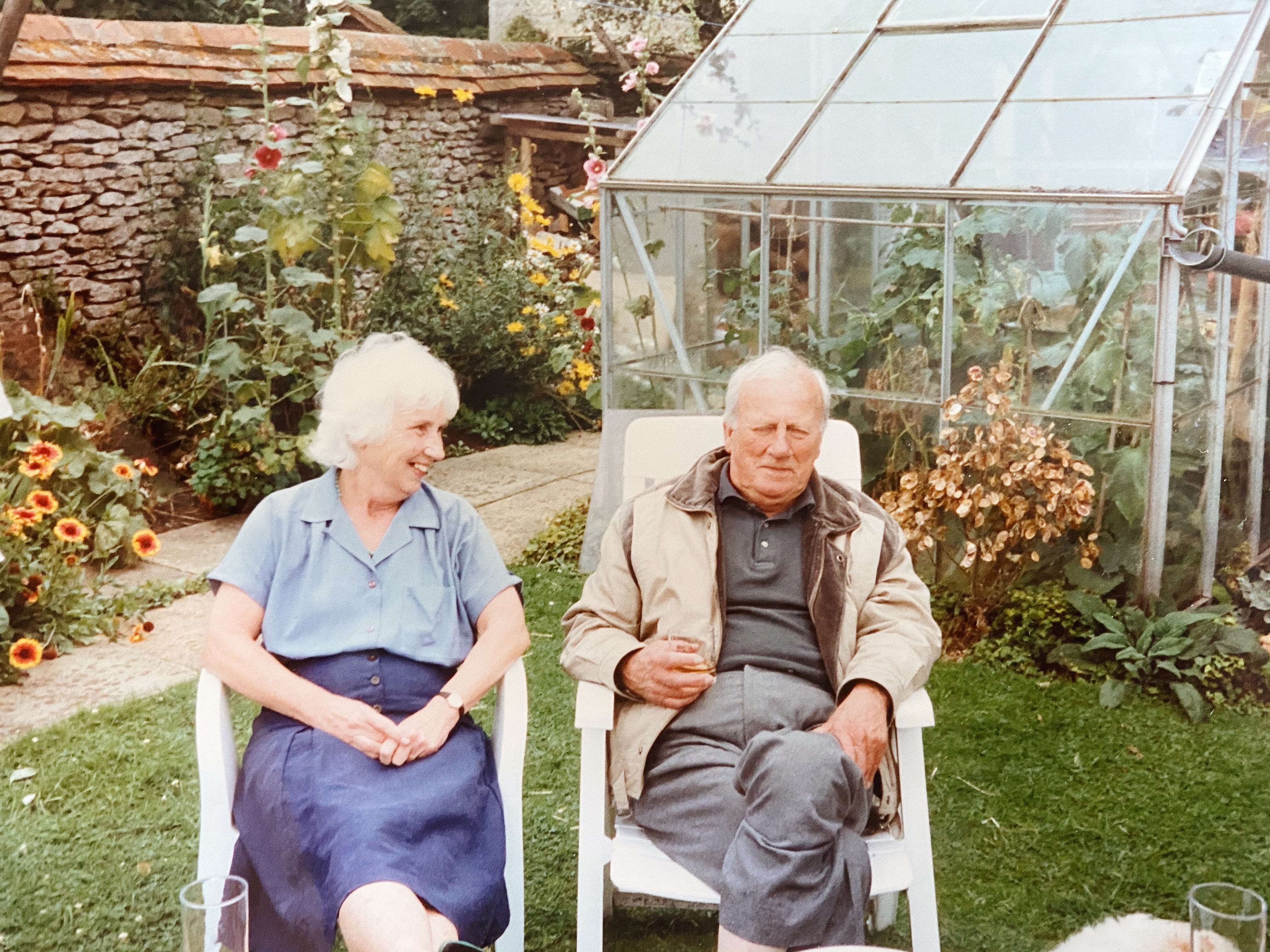
My grandmother Rosie lived 94 years. By the rarity argument alone, she was extraordinary — scarcer than any vintage, more singular than any first edition. She had lines on her face and hair that had gone white and hands that had done 94 years worth of living.
What collectors call patina. What we simply call Grandma.
She left behind three children, plenty of grandchildren, even more great-grandchildren, and the kind of provenance that no auction house has ever figured out how to price.
I don’t know what she would have fetched at Sotheby’s. I suspect considerably more than $812,500. But then again, some things were never meant to be sold.
This was beautiful. The growing up is happening to all of us, and the growing old to the luckiest of us. We should value our elders. They know more than we think they do.
Apparently I’m approaching my peak value….auction announcement to follow!